Destination
Essaouira from Marrakech by car
The closest Atlantic coast to Marrakech: 175 kilometres on the N8, 2 hours 30 of toll-free driving, and 10 to 15 degrees of coolness on arrival at the Skala ramparts.
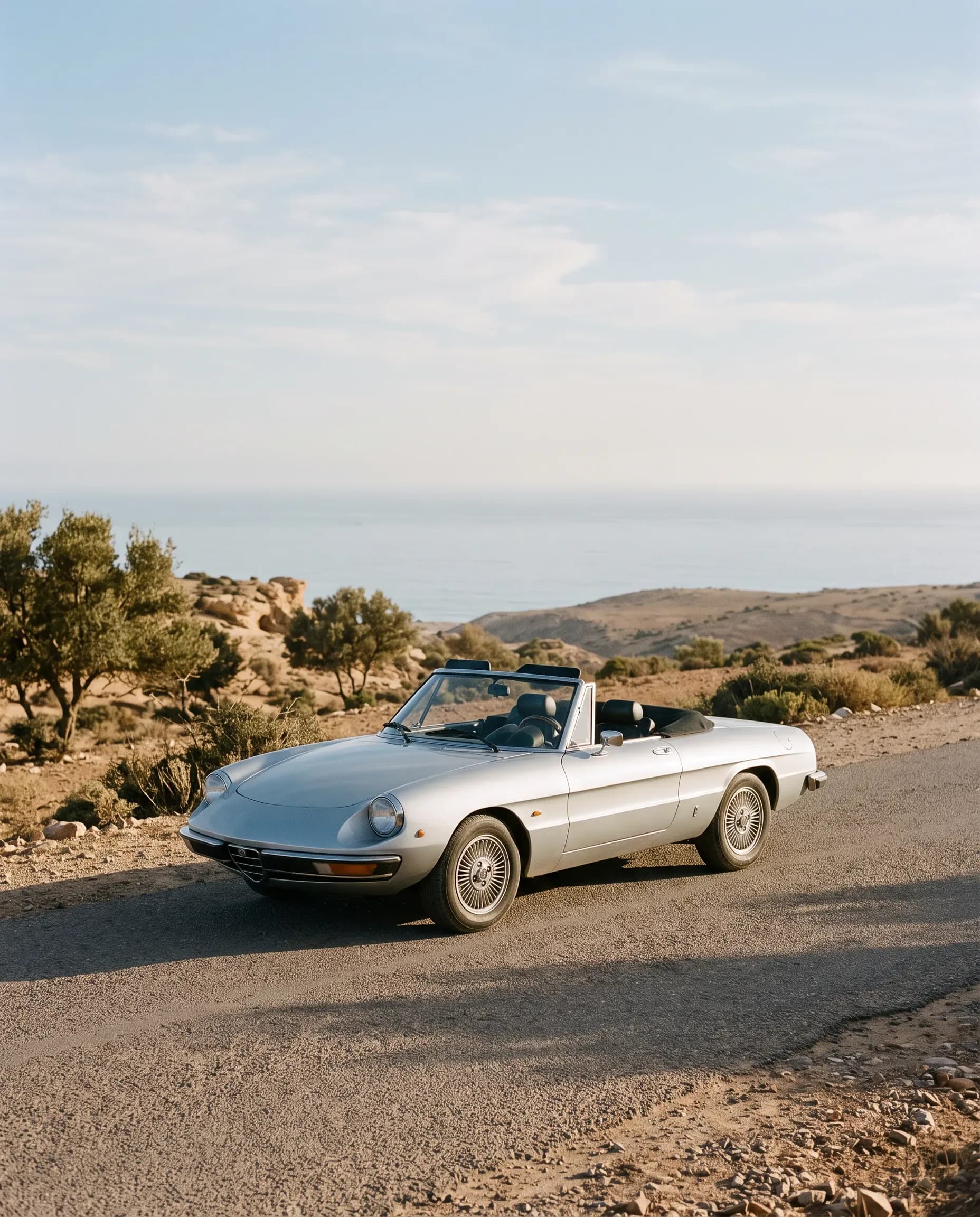
Essaouira sits 175 kilometres west of Marrakech, 2 hours 30 of driving on the N8. The two-lane national route, resurfaced and toll-free, requires no particular vehicle until the final 40 coastal kilometres along the Atlantic shoreline.
The Marrakech — Essaouira route in numbers
Eight figures recorded along the N8, between Guéliz and the Essaouira ramparts.
- Distance
- 175 km from Guéliz, west of Marrakechbase
- Drive time
- 2 hours 30 of driving, no significant trafficbase
- Road type
- N8 national route, two lanes, resurfaced, no tollbase
- Altitude
- Marrakech at 450 m, Essaouira at sea levellocal
- Fuel stations
- Two on the route: Chichaoua (95 km) and Ounagha (155 km)local
- Coastal climate
- 10 to 15 °C cooler than Marrakech, constant Atlantic wind year-roundlocal
- Parking in Essaouira
- Bab Marrakech and Bab Doukkala, outside the medina, 20 MAD per dayLCM
- Recommended vehicle
- Any saloon handles the N8; the convertible stands out on the final 40 coastal kilometresLCM
What is the route between Marrakech and Essaouira?
The Marrakech-Essaouira route follows the N8 for 175 kilometres, a two-lane national road, resurfaced and toll-free. The drive takes 2 hours 30 and crosses Chichaoua, the argan groves, then Ounagha before running along the Atlantic for the final 40 kilometres.
The N8 leaves Marrakech heading west and reaches Chichaoua after 95 kilometres. Chichaoua holds the last large fuel stop before the coast. Two lanes border the road for the entire route, with no one-way section and no reported dangerous overtaking.
The argan groves begin at kilometre 120 and extend to kilometre 150. Goats climb the argan trees along this section, a scene specific to this region of Morocco. Ounagha follows at kilometre 155, with the route's second fuel station.
The final 40 kilometres run alongside the Atlantic Ocean. The road descends from 450 metres of altitude in Marrakech to sea level in Essaouira. Morning fog sometimes covers this coastal stretch over its last 20 kilometres.
- Chichaoua, kilometre 95: last fuel station before the coast.
- Argan groves, kilometres 120 to 150: goats climbing the argan trees.
- Ounagha, kilometre 155: the route's second fuel station.
- Coastal stretch, final 40 kilometres: road running along the Atlantic.
Which vehicle to choose for the Marrakech-Essaouira route?
Any vehicle in the fleet handles the Marrakech-Essaouira route: the N8 is a resurfaced national road, with no track and no mountain pass. The convertible earns its place on the final 40 coastal kilometres, where the road runs directly alongside the Atlantic Ocean.
The N8 presents no technical constraint. A Mercedes or an Audi covers the 175 kilometres in 2 hours 30 with constant road comfort. No 4x4 is necessary on this route.
The convertible changes the nature of the drive on the final section. The road runs alongside the Atlantic for 40 kilometres before Essaouira, with no blind bend and no heavy traffic. This is the one route in the network where an open roof takes full advantage of the coastal scenery.
- convertible and cabriolet rental in Marrakechearns its place on the 40 final coastal kilometres
- luxury Mercedes rental in Marrakechconstant comfort over 2 h 30 of driving
- luxury Audi rental in Marrakechcomfort alternative for the N8 route
What to see in Essaouira from Marrakech?
Essaouira offers four main sights within 25 kilometres of the centre: the 18th-century Skala de la Ville ramparts, the active fishing port, the UNESCO-listed medina, and Sidi Kaouki beach, 25 kilometres to the south along the coast.
The Skala de la Ville dates from the 18th century and forms the ramparts facing the ocean, with cannons lined along the enclosure wall. The fishing port, active every morning, sells sardines and octopus directly on the quays next to the Skala.
The medina of Essaouira has been a UNESCO World Heritage Site since 2001, inside the same ramparts. Sidi Kaouki, a beach 25 kilometres to the south, extends the trip for visitors staying overnight.
- Skala de la Ville: 18th-century ramparts and cannons facing the Atlantic.
- Fishing port: morning auction and direct sale of sardines and octopus.
- Medina: UNESCO-listed quarter inside the ramparts.
- Sidi Kaouki beach: 25 kilometres south, a kitesurfing spot.
When to go to Essaouira and what to expect from the climate?
Essaouira runs 10 to 15 °C cooler than Marrakech year-round, with a constant Atlantic wind. This wind reaches its peak from April to September, which makes Essaouira a kitesurfing centre. Morning fog sometimes covers the final 20 kilometres.
The temperature gap comes from the city's coastal position, while Marrakech sits at 450 metres of altitude against sea level in Essaouira. This constant coolness makes Essaouira the classic summer escape for Marrakech residents.
The round trip fits into a single day, with 5 hours of driving and time to visit the Skala, the port and the medina. An overnight stay makes better use of the site, particularly for the sunset over the ramparts.
Parking in Essaouira sits outside the medina walls, at the Bab Marrakech and Bab Doukkala car parks. Each car park charges 20 MAD per day, with no reservation required.
- Strongest wind: April to September, favourable for kitesurfing.
- Possible morning fog on the final 20 kilometres, early in the day.
- Temperature gap: 10 to 15 °C cooler than Marrakech.
- Parking: Bab Marrakech or Bab Doukkala, 20 MAD per day.
How to organize a day trip to Essaouira from Marrakech?
Book a vehicle the day before, have it delivered to Ménara airport or your riad, and leave early to avoid the morning coastal fog. The route drives without a chauffeur; a chauffeur remains available at 900 MAD for 10 hours of service.
The Marrakech-Essaouira route requires no special licence and no additional equipment. Check Moroccan driving rules before leaving, particularly the speed limits outside built-up areas on the N8.
- car rental at Marrakech Ménara Airportdirect departure for Essaouira from Ménara
- chauffeur-driven luxury car rental in Marrakech900 MAD/day to avoid driving the N8
- self-drive car rental in Marrakechfree driving on the coastal route
Frequently asked questions about Essaouira from Marrakech
Five questions come up before every departure for Essaouira: feasibility as a day trip, the toll, the vehicle needed, the coastal climate, and parking in the city.
Can the Marrakech-Essaouira round trip be done in one day?
Yes. The round trip totals 5 hours of driving, leaving 3 to 4 hours on site to visit the Skala de la Ville, the fishing port and the medina. A departure before 9 am avoids the morning fog on the final 20 kilometres.
Is there a toll on the Marrakech-Essaouira route?
No. The N8 is a two-lane national road, resurfaced, and carries no toll over the 175 kilometres between Marrakech and Essaouira. Two fuel stations line the route, at Chichaoua and at Ounagha.
Is a 4x4 needed to reach Essaouira from Marrakech?
No. The N8 road is fully paved and resurfaced, with no track and no mountain pass to cross. Any saloon or convertible in the fleet covers the 175 kilometres in 2 hours 30, including the final 40 kilometres along the Atlantic.
Why is Essaouira cooler than Marrakech?
Essaouira sits at sea level, against 450 metres of altitude in Marrakech, and receives a constant Atlantic wind year-round. The temperature stays 10 to 15 °C lower than Marrakech, which explains the city's kitesurfing status, with peak wind from April to September.
Where to park in Essaouira?
Parking sits outside the medina walls, at the Bab Marrakech and Bab Doukkala car parks. Each car park charges 20 MAD per day. The medina stays pedestrian inside the walls, where no vehicle circulates.
Other routes and vehicles for the coast
Other destinations from Marrakech
- Destinations and excursions from Marrakech
Every route departing from Marrakech.
- Agafay Desert from Marrakech by car
30 km, 45 minutes, final track in a 4x4.
- Ourika Valley from Marrakech by car
68 km, paved road as far as Setti Fatma.
Vehicles for the coastal road
- Convertible and cabriolet rental in Marrakech
Open roof on the final 40 coastal kilometres.
- Luxury Mercedes rental in Marrakech
Constant comfort over 2 h 30 of driving.
- Luxury Audi rental in Marrakech
Comfort alternative for the N8 route.
Organizing your departure
- Car rental at Marrakech Ménara Airport
Direct departure for Essaouira from Ménara.
- Chauffeur-driven luxury car rental in Marrakech
900 MAD/day, 10 hours of service.
- Self-drive car rental in Marrakech
Free driving on the N8.
- Driving in Marrakech: rules and advice
Speed limits outside built-up areas.
- Luxury car rental rates in Marrakech
Full price grid by vehicle category.
- Contact and booking in Marrakech
Book a vehicle for Essaouira.
Luxury Car Marrakesh rents the vehicles used for the Essaouira route from Marrakech, Morocco, over the 175 kilometres of the N8. Vehicles are delivered free of charge to Marrakech-Ménara Airport, to hotels in Guéliz and Hivernage, and to riads in the Medina, with a chauffeur available at 900 MAD per day for the coastal route.